
How to Get Marion County Court Records
Start with whatever paper names the court. Joy Smith, Clerk of Superior and Juvenile Court, keeps the Marion Superior and Juvenile records. Superior users can turn to PeachCourt through Georgia Courts E-Access, an account-based provider. The docket or document you need may not be there. If so, reach the clerk at 229-649-7321, joy.smith@gsccca.org, or PO Box 41, Buena Vista, GA 31803-0041. The official sources place the courthouse on Courthouse Square. They post no regular counter hours or public-terminal rules, so a quick call ahead is wise.
Probate and Magistrate records run through the local office at 229-649-5542. Buena Vista Municipal records use the city court contact at 229-649-7888. A request can start with an online provider, a phone call, email, or mail. It can also be an in-person inspection arranged with the custodian. The Georgia Open Records Act supplies general public-record context. Court rules still govern court-file access.
- Identify Superior, Juvenile, Probate, Magistrate, or Buena Vista Municipal Court.
- Name the docket sheet, pleading, order, judgment, citation, transcript, or certified copy needed.
- Give the case or citation number, filing year, and document date or type if known.
- Ask whether online access, inspection, email, mail, or a written request is the correct channel.
- Confirm access, redaction, copy type, fee, postage, and payment method before ordering.
- Keep the receipt, request date, identifier, and exact description of the requested item.
Marion County Court Records Custodian
The Superior Clerk does far more than answer search questions. The office handles record management and security. It also handles the court registry, civil and domestic filing, criminal processing, appeals, garnishments, and fine or fee collection. It is the main stop for a Superior docket. It also serves the papers filed behind it and any authenticated copy. The official Marion Superior and Juvenile Clerk page shows the office contact and its responsibilities.
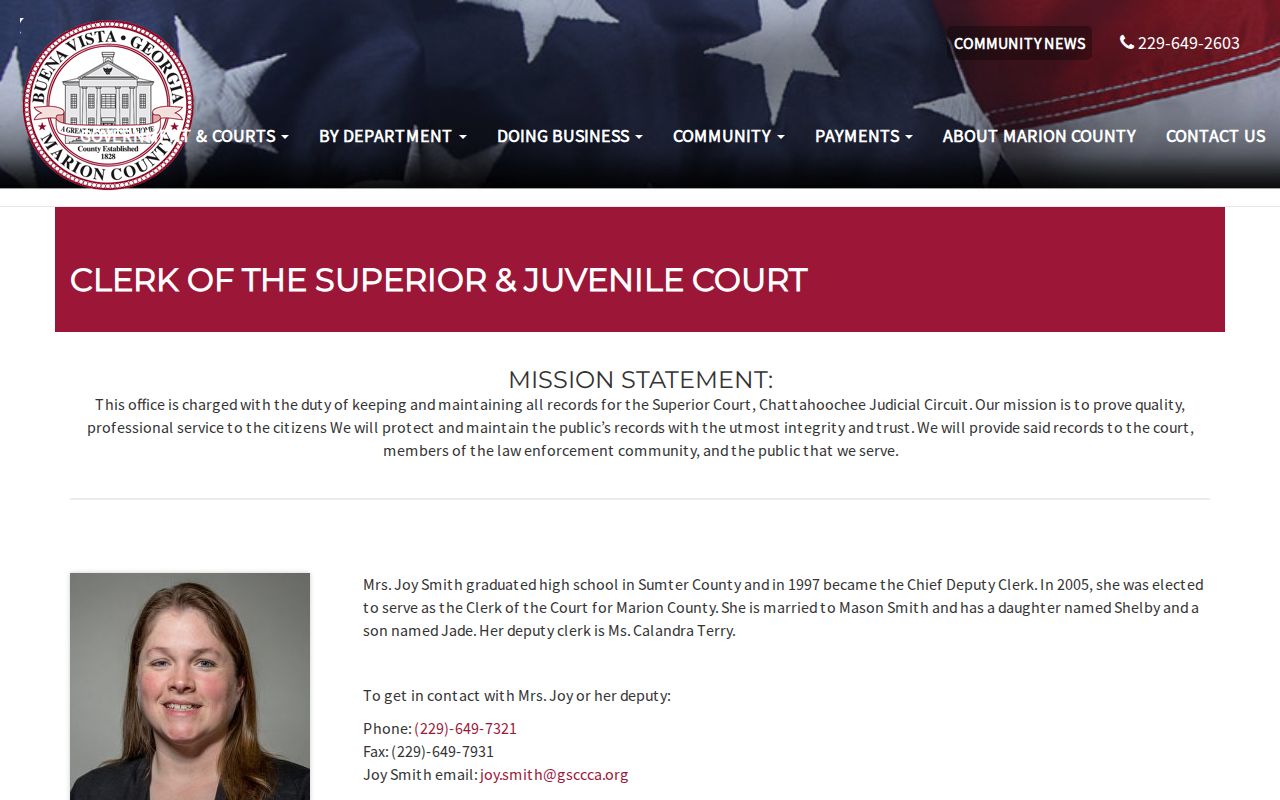
The page posts no copy-request form, certified-copy price, transcript route, or guest document viewer. A precise phone or email request will get you further than a broad search.
Types of Marion County Court Records
A Marion County court record can mean several things. The docket is simply an event list. A filed document holds the actual text tied to one event. A file-stamped copy shows filing information. A certified copy carries the custodian's authentication. A transcript captures spoken proceedings and normally follows a separate court-reporter process.
- Docket sheets and chronological case-event records
- Complaints, petitions, answers, motions, exhibits, and notices
- Signed orders, judgments, dismissals, and disposition papers
- Criminal charging papers and public case documents
- Probate, Magistrate, Juvenile, and Municipal records available under their own access rules
- File-stamped, certified, or otherwise authenticated copies when offered
A deed, plat, lien, UCC, or notary index is a recording system, not a case docket. A payment confirmation is not the full court record either. State and federal files stay separate as well.
Marion County Court Record Checklist
A clear request saves the clerk from guessing which file or copy you want. Start with the court, then describe the record in plain terms. Keep every segment and punctuation mark of the case number intact. Uniform Superior Court Rule 36.9 sets out a sequence. It is built on filing year, case type, consecutive number, and judge assignment where required. Marion publishes no local code legend. The clerk may need to interpret the number with you.
| Request detail | Why it matters |
|---|---|
| Court and county | Separates Superior, Juvenile, Probate, Magistrate, and Municipal custodians. |
| Case number and year | Helps locate the correct file without substituting a citation or recording number. |
| Document title or date | Distinguishes a docket sheet from a motion, order, judgment, or notice. |
| Copy purpose | Lets the clerk explain whether plain, certified, exemplified, or another form is needed. |
| Delivery method | Allows the office to quote copying, certification, postage, and retrieval costs. |
If you have no case number, ask the clerk what minimum name, year, and case-type details will work. A deed book and page, a federal action number, or a vendor receipt will not do.
What a Marion County Court Record Contains
What a file holds depends on the court and the case. The inventory below describes document categories supported by Georgia rules and local clerk duties. It does not claim every case contains each field, or that every item is public online.
| Case identity | Court, county, case number, filing date, category, and party style where public. |
|---|---|
| Docket sheet | A chronological list of filings, service, settings, orders, disposition, and appeal events. |
| Pleadings | Complaints, petitions, answers, accusations, indictments, motions, and responses as applicable. |
| Orders and judgments | The court's signed rulings, disposition documents, and other final or interim orders. |
| Notices and exhibits | Trial notices, service papers, attachments, and exhibits when filed and publicly available. |
| Access markers | File stamp, certification, redaction, document link, or sealed/restricted treatment if shown. |
A docket line that says "order" is not the order itself. Request the document when the exact ruling, signature, date, or terms must be verified.
Marion County Court Record Certification
GSCCCA eCertification offers an online workflow for participating counties. A user picks a county and document type. They then submit request details and complete payment or final authorization after clerk processing. Its public materials do not confirm Marion takes part. Call the Superior Clerk before relying on it for Marion County court records. The official GSCCCA eCertification request portal shows the county and document-request path.
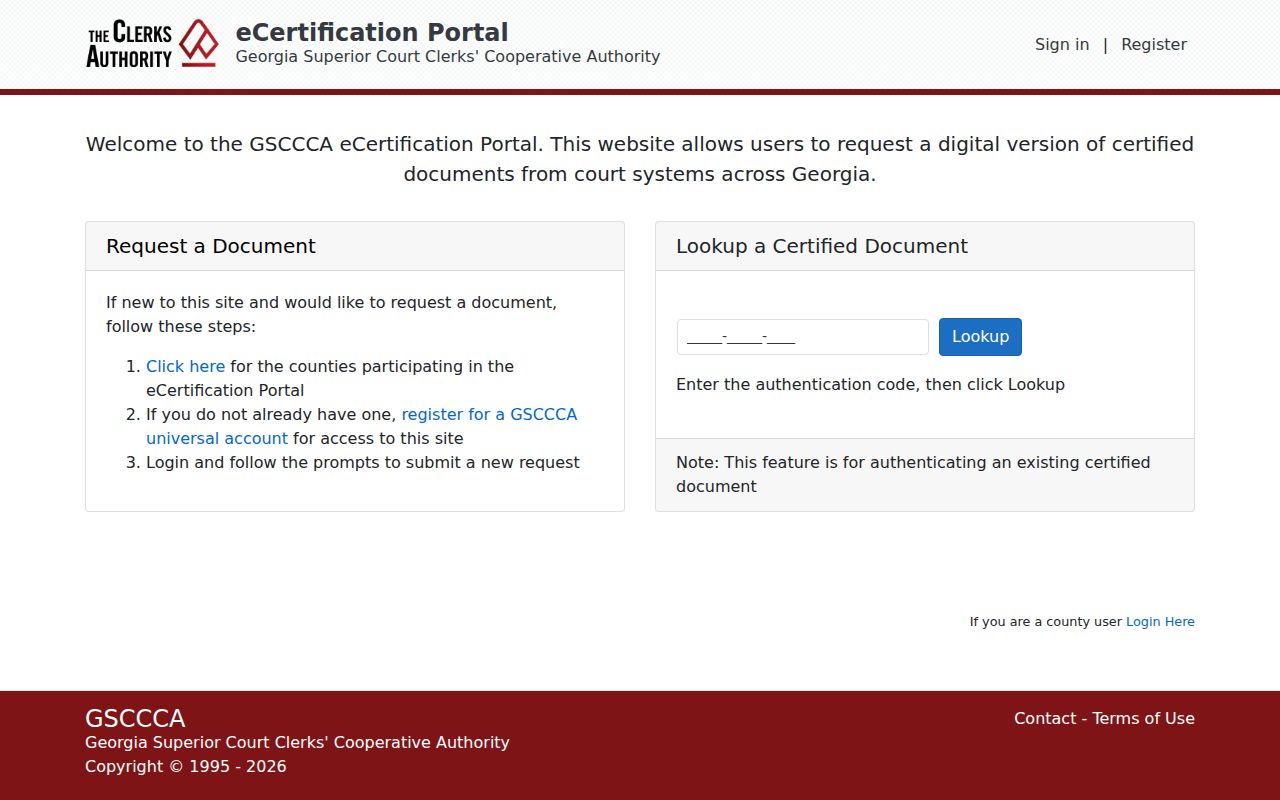
The official page shows how the statewide service works, not that Marion accepts requests through it. The official eCertification information page explains the digital certification process.
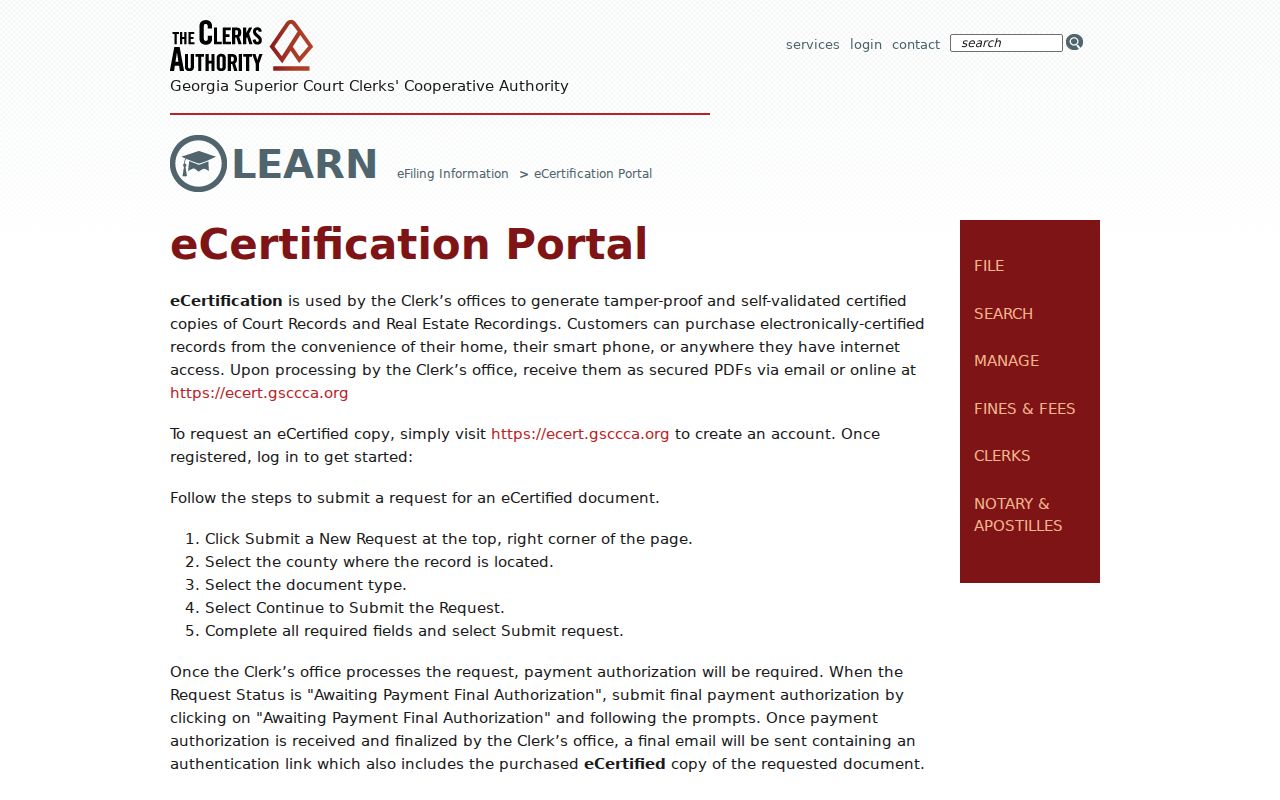
That second source helps you tell an authenticated electronic record from an ordinary downloaded image or provider docket view.
Certified Copies and Fees
A plain copy reproduces the record. A file-stamped copy shows acceptance or filing information. A certified copy is authenticated by the custodian. It may be required by another court or agency. The right form depends on intended use, so ask the recipient and the Marion clerk whether certification, exemplification, or another authentication applies. The clerk publishes no court-copy, certification, transcript, search, or postage amounts. Confirm fees directly rather than trusting borrowed dollar figures.
| Item | Amount |
|---|---|
| Plain court-record copy | Not published; ask the record custodian |
| Certified copy | Not published; confirm by court and document |
| Search or retrieval work | Ask whether a charge applies before work begins |
| Transcript | No local form or fee located; ask for the correct reporter route |
| Postage or authentication | Confirm the delivery and certification requirements |
Superior and Juvenile Clerk
Courthouse Square
Buena Vista, Georgia 31803
Mail: PO Box 41, Buena Vista, GA 31803-0041
229-649-7321
GSCCCA image-service prices belong to its recording-index system and are not Marion court-copy fees.
Older Marion County Court Records
Marion County's courthouse history runs deep. The current building went up in 1849-1850, got a remodel in 1928, and joined the National Register in 1980. An earlier courthouse stood at Tazewell. Beyond those dates, the clerk publishes no archive catalog, digitization schedule, or retention statement for old docket books.
Want an old Marion County court record? Give the clerk your best guess at the year, plus the court, the case type, the names on the historical file, and the exact document you need. Ask where it lives now: at the courthouse, offsite, or with another archive. A blank PeachCourt result means nothing there. Paper files may still sit in the clerk's vault. An online provider can show nothing. No public source lists a microfilm collection, archive fee, or standard turnaround for historical files.
Public Access and Sealed Records
Uniform Superior Court Rule 21 opens most eligible court records to the public unless a law or procedure limits access. Rule 21.6 governs protected identifiers and redaction. Juvenile files stay outside ordinary public inspection. Adoption, sealed, protective-order, and similar material may be withheld or only partly shown. An empty online result does not mean a record never existed.
Key access rules:
Uniform Superior Court Rules 21 and 21.6 set the public-access baseline and protected-identifier rules.
Uniform Magistrate Court Rule 20 limits sensitive personal and financial data in filings.
O.C.G.A. § 15-11-708 restricts ordinary public inspection of juvenile records.
Never try to piece a redacted identifier back together from some other source. Instead, ask the clerk whether access is allowed and which public portion can be copied. The clerk's office can walk you through procedure, though it cannot hand out legal advice.
Marion County Open Records Limits
Georgia's Open Records Act leans toward public inspection and copying, with exemptions carved out. The Attorney General's guidance covers costs. These include reasonable search and retrieval costs, the first 15 minutes of qualifying staff time, ordinary-copy limits, and redaction. None of that overrides a sealing order, juvenile confidentiality, or a court's own access procedure. Need statewide request and fee context? The official Georgia Open Government FAQ spells out the details.
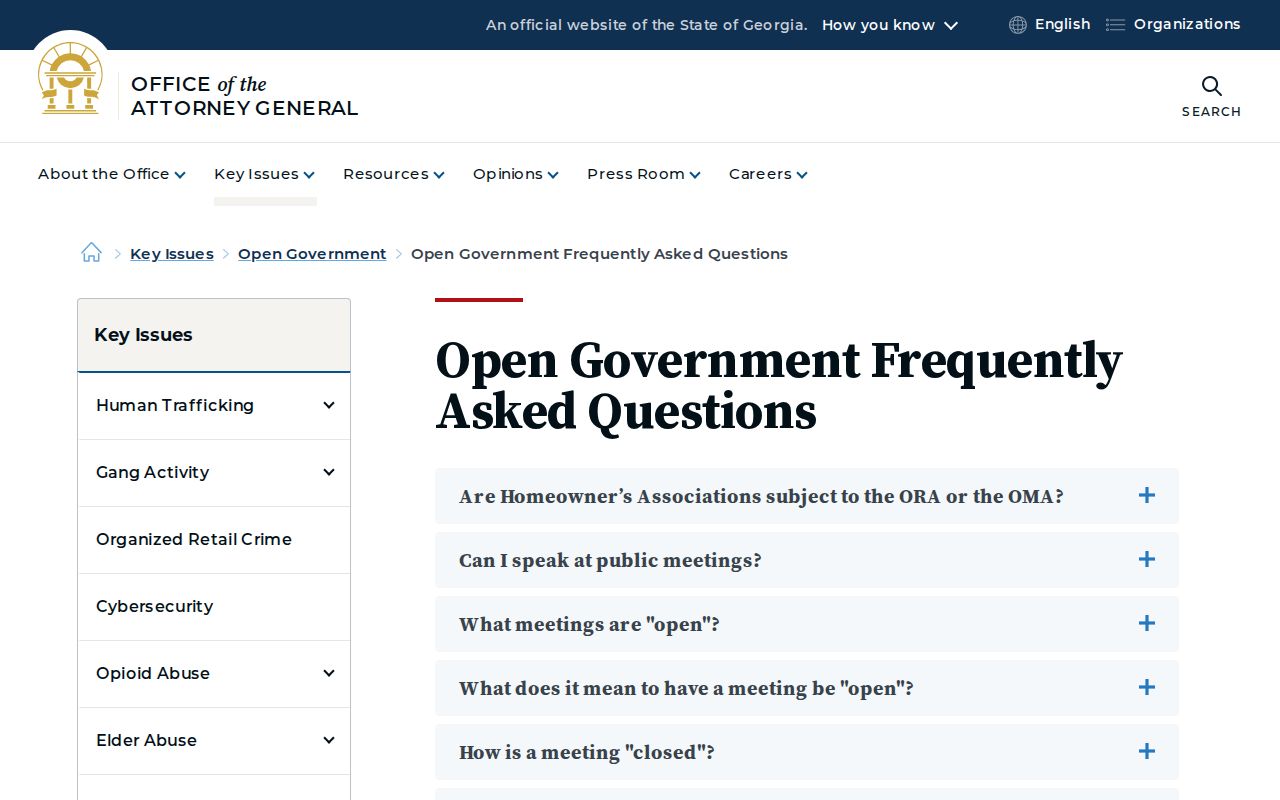
That FAQ helps you frame a request. Still, Marion's clerk has the final word on court-record access, certification, and any exact charge.
The record may be just a docket entry. The Marion County case search helps you lock in the right identifier before you call the clerk. Is the matter criminal? See the local criminal docket process for the gap between event listings and full case files. The clerk publishes no certified-copy fee, transcript form, exemplification rule, or eCertification statement.