
How to Search Civil Dockets
For a Superior matter, open the Georgia Courts E-Access directory and pick Marion Superior Court. The directory routes you to PeachCourt, which requires an account. Georgia has no single open statewide register that merges every Marion County civil docket. Even with an account, older documents and restricted filings may not appear online.
When PeachCourt falls short, call Joy Smith, Clerk of Superior and Juvenile Court, at 229-649-7321. You can also email joy.smith@gsccca.org. Or write PO Box 41, Buena Vista, GA 31803-0041. For a Magistrate civil matter, dial 229-649-5542. Ask the clerk's office whether in-person inspection, a mailed request, or an electronic provider suits the record you need. The courts publish no separate counter hours or public terminal procedure.
- Read the court name, filing year, and full case number from the official paper.
- Use E-Access and PeachCourt for a Marion Superior civil matter.
- Use the Magistrate clerk for a Statement of Claim, dispossessory, garnishment, or other limited suit.
- Read the event list in order and locate the newest order, judgment, or setting.
- Request the filed document or certified copy when a short docket label is not enough.
Marion County Civil E-Filing Routes
The Georgia Courts e-file chart lists Marion Superior Court as mandatory through PeachCourt. That designation governs how papers get filed. It does not make the chart a case-search tool. Anyone tracking an existing Marion County civil docket should turn to E-Access first, then the clerk when account access or document coverage falls short.
Magistrate filing runs on a separate track. Marion County connects eFileGeorgia for Statement of Claim, Garnishment, and Dispossessory filings.
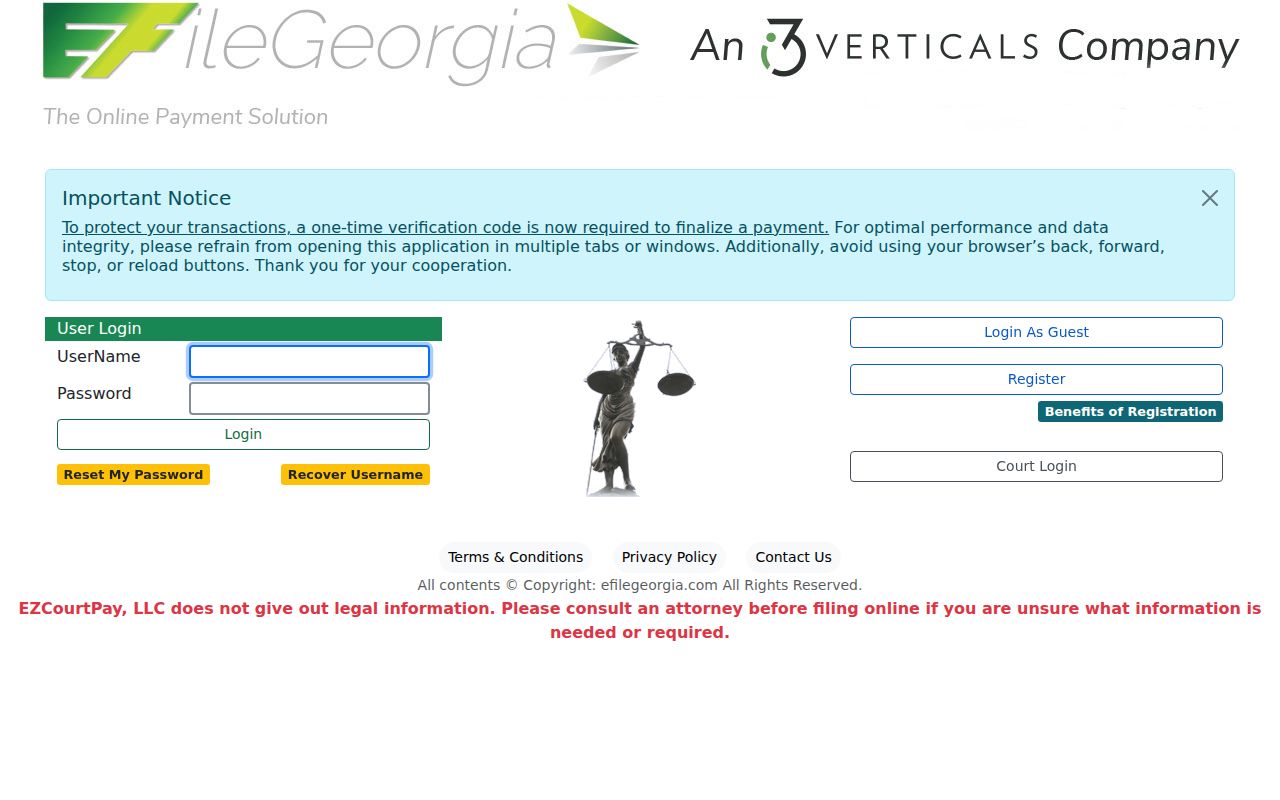
The PeachCourt screen offers login, guest, registration, password-reset, username-recovery, and court-login controls. Those are filing-service tools, not proof of an open Marion-wide docket search.
What a Marion County Civil Docket Shows
No public guest view of a Marion County civil docket exists, so build your request list from Georgia filing rules and the local courts' published work. PeachCourt may not display every field in the exact form described here. Rule 36.9 sets out a number sequence built on filing year, case type, consecutive number, and judge assignment where required, so keep every segment of the official year-type-sequence intact when you cite a case number.
| Case identity | Court, division if shown, case number, filing date, and category. |
|---|---|
| Party style | Plaintiff and defendant, or petitioner and respondent, as the official file labels them. |
| Starting paper | Complaint, petition, Statement of Claim, Dispossessory, or Garnishment. |
| Case events | Service, answer, counterclaim, motion, response, exhibit, and order entries. |
| Settings | Trial notice or hearing date, plus place or judicial officer if actually shown. |
| Disposition | Default, settlement, dismissal, judgment, writ, satisfaction, or appeal event. |
A filing line is only a pointer into the court process. When the meaning turns on the actual text, request the motion, order, judgment, or other document from the clerk.
Marion County Civil Docket Claim Boundary
Marion Magistrate Court hears general civil claims up to $15,000. That figure is the county's stated jurisdictional limit. It is not a price, a fee, or an answer for every dispute. Within that scope fall money owed, property or personal damage, and breach of contract. Garnishment also belongs there, along with dispossessory proceedings, landlord-possession disputes, and writs of possession.
Divorce, equitable relief, and title-to-land cases do not belong in Marion Magistrate Court. That is the county's own instruction. Those subjects point toward Superior Court. The clerk can tell you which office holds an existing docket. The clerk cannot choose a claim or give legal advice.
| Case signal | Likely Marion court | Key route |
|---|---|---|
| Major civil, domestic relations, equity, land title | Superior Court | PeachCourt and Superior Clerk |
| Claim up to $15,000 | Magistrate Court | Magistrate clerk |
| Statement of Claim, Garnishment, Dispossessory | Magistrate Court | eFileGeorgia for filing; clerk for docket access |
| Appeal from final Magistrate judgment | Superior Court receives appeal | Confirm both original and appeal files |
Types of Civil Cases on the Docket
A Marion County civil docket reflects whichever court opened the case. Superior Court handles major civil disputes, domestic relations, equity, and land-title matters. Its clerk also processes civil and domestic filings. Garnishments, appeals, liens, trade names, and records work pass through the same office. Some of those recording duties feed separate indexes rather than a civil case docket.
- Superior civil complaints and petitions outside Magistrate's limited jurisdiction
- Domestic-relations matters, subject to access limits on sensitive material
- Equity and title-to-land proceedings assigned to Superior Court
- Magistrate Statements of Claim and contract or money disputes within its limit
- Dispossessory, garnishment, and related Magistrate proceedings
Probate files and recording indexes live with different offices, and each serves its own purpose. The Marion County civil docket covers lawsuits only, so follow the court and case type printed on the filed paper rather than treating every county record as one docket.
Marion County Civil Docket Versus Deed Index
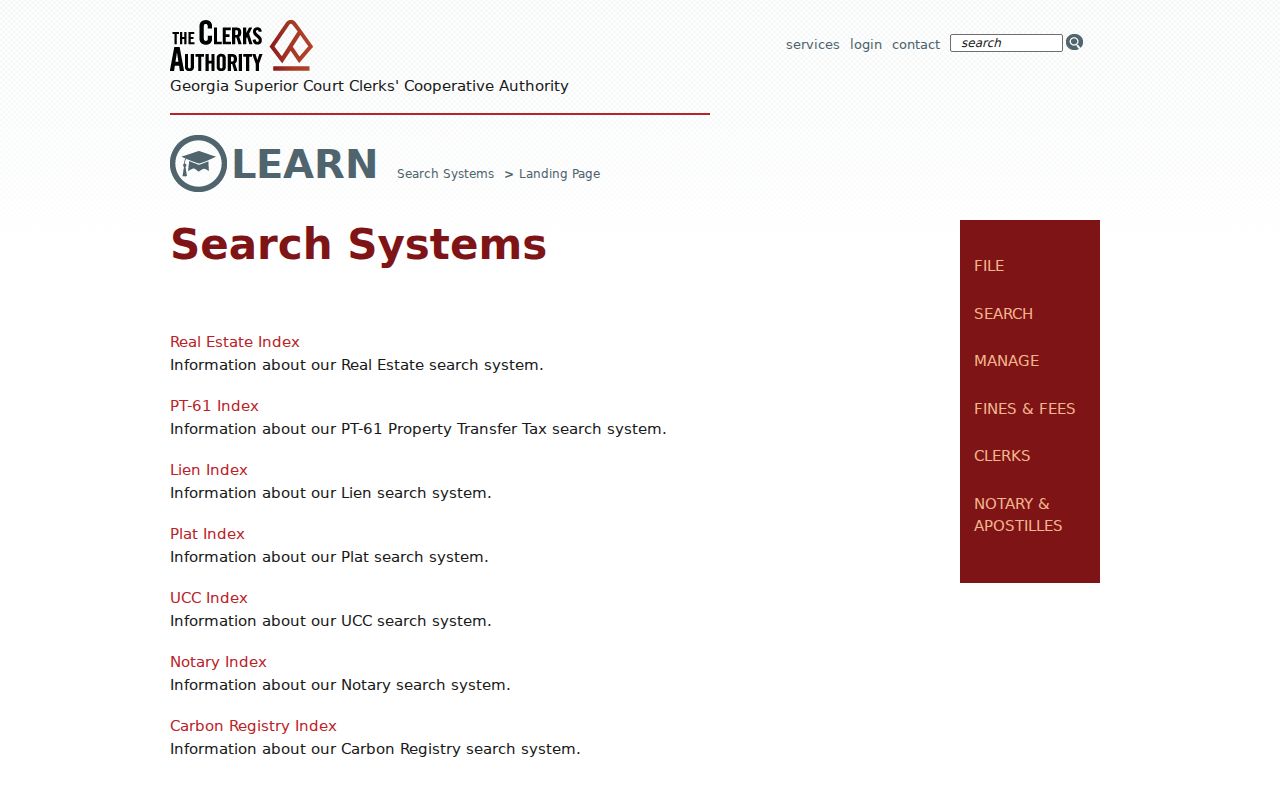
People often confuse the clerk's recording work with its court docket. The GSCCCA search systems cover real-estate, lien, plat, UCC, notary, and other recording indexes. Those tools can help you locate a recorded instrument. They are not the Marion County civil docket. That docket tracks a lawsuit in time order, entry by entry, as the court file grows.
The official GSCCCA source screen shows the full range of recording systems the state offers.
The distinction matters most in a property dispute. A deed book and page marks a recorded instrument, while a Superior case number marks the court action. Keep both identifiers when land is involved, and search each in its proper system.
Settings and Hearings on Civil Dockets
Marion County publishes no standalone public calendar. PeachCourt can display an event once you have an account and the case is viewable, yet the login screen itself shows no sample calendar. For a Superior civil setting, trust the newest notice or order first. Then confirm it with the Superior Clerk. Never assume an old provider date survived a reset.
Magistrate cases work by mail. The clerk sends a trial notice, so keep your mailing address current with the county. Skip a hearing and you risk default, dismissal, or some other adverse result, depending on the posture of the case. A written order follows the decision. If a notice never came or a date looks wrong, call 229-649-5542 instead of waiting on an online calendar the county does not post.
The Marion County court calendar walks through the clerk-and-notice workflow for dates, resets, and emergency changes.
Marion County Civil Docket Service Terms
Read each civil entry as a step, never a verdict. A complaint or petition opens the claim; a summons or service return records notice activity. Neither one decides anything. An answer pushes back on the claim. A motion asks the court to act. A trial notice sets a date but promises no outcome. Treat the docket as a chain of filings, and the picture stays clear.
- Service
- Formal delivery of court process or notice, with an event or return often added to the record.
- Default
- A possible result after a failure to respond or appear, subject to the posture and court's order.
- Dispossessory
- Georgia's possession proceeding, listed within Marion Magistrate civil jurisdiction.
- Disposition
- The outcome or closing event, such as judgment, dismissal, settlement order, or other final action.
Always find the newest order or judgment before calling the result. A settlement or consent order can close a case with no trial at all. A final Magistrate judgment may then land in a separate Superior appeal record.
Public Access to Civil Dockets
Georgia court rules generally make eligible civil records public. Public access still has limits. A Marion County civil docket may hide protected identifiers, sealed documents, adoption material, and sensitive portions of domestic, guardianship, or similar proceedings. So a blank online can mean several things. It may point to account access, an undigitized older file, or simply the wrong court.
Key access rules:
Uniform Superior Court Rule 21 sets public access as the baseline unless law or procedure limits it.
Rule 21.6 in the same official rules governs protected identifiers and their redaction or separate treatment.
Uniform Magistrate Court Rule 20 limits sensitive personal and financial data in Magistrate filings.
Georgia's Open Records Act adds broader public-record context. Still, it cannot override court-specific confidentiality rules or a sealing order. Ask which portion may be inspected and which copy type the office can release.
Marion County Civil Docket Appeals Continue
A final Marion Magistrate judgment can move up to Superior Court. The county requires costs paid and a jury-trial request filed. The appeal does not erase the original Magistrate docket. The lower court keeps the record of the claim, service, trial notice, and judgment. Superior Court may open its own appeal file with a new number and later events. Ask each clerk which record it holds. Bring the original case number, the judgment date, and any appeal information you have. One PeachCourt result will not carry the whole lower-court history. The Marion County case search helps separate the original court from the appeal route.
Exact Marion civil filing fees are not posted. Certified-copy prices and a public sample field list are not posted either. Rule 36.10 points to filing and service fees or a pauper affidavit. But only the clerk can state the amount. Never borrow a vendor fee or another county's schedule.
Note: A docket summary locates activity. The filed order or a clerk-certified copy is the better source when the exact ruling must be known.